It is National Allotment Week from August 10 to 16. I know this because the internet keeps showing me aggressively cheerful people standing in massive, sun-drenched gardens holding woven baskets full of muddy courgettes.
I live in a top-floor flat in Kendal. My closest connection to the great outdoors is watching the relentless northern rain batter my single-pane living room window. I do not have a garden, a patio, or even a balcony. What I do have is a narrow strip of cracked white plastic windowsill and a very stubborn personality.
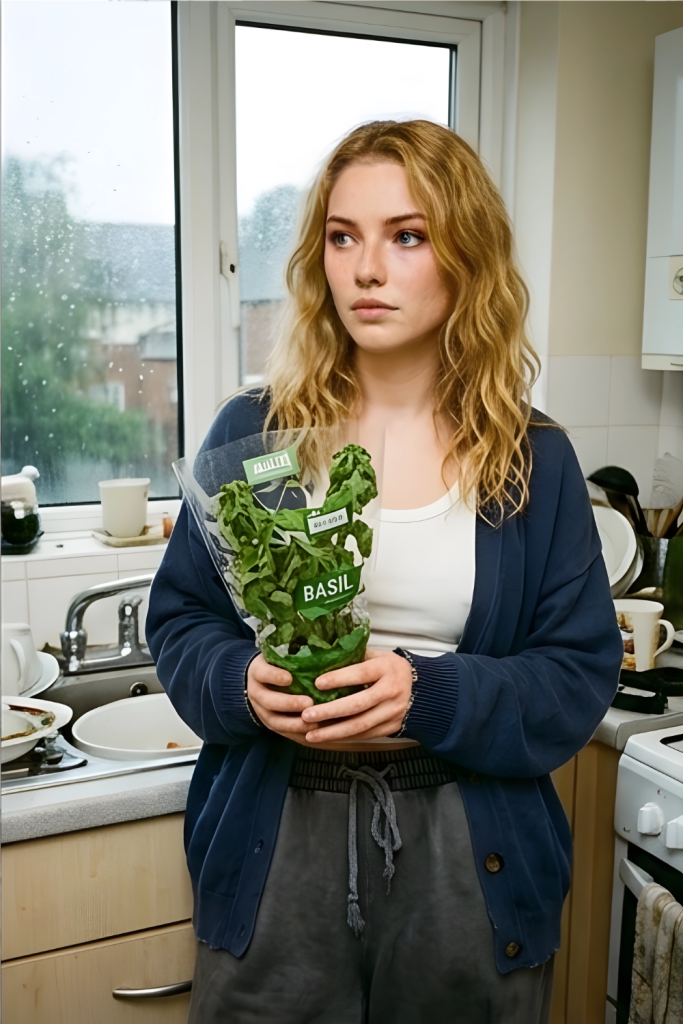
So, in the spirit of celebrating agriculture, I decided to channel my inner groundskeeper. I was going to grow something. And by grow something, I mean I was going to rescue a completely battered, wilting basil plant from the discount shelf of my local supermarket and bully it back to life.
The Psychology of the Discount Herb
I bought this sad little plant for exactly one quid after finishing a deeply annoying closing shift at the cinema. When you spend eight hours sweeping up stale popcorn and dealing with people who fundamentally misunderstand how seat numbers work, you desperately crave something quiet and natural.
Supermarket herbs are essentially designed to die. They cram a dozen separate seedlings into one tiny plastic pot, drown them in artificial nutrients, and ship them off to be neglected on a bright shelf. By the time I picked this one up, the soil was a brick of soggy misery and the leaves were drooping like they had just given up on life entirely.
Taking it home felt like a psychological experiment. Could I take something that the universe had destined for the food waste bin and force it to thrive? Yes. The answer had to be yes. I was going to keep this basil alive purely out of spite.
Upcycling a Coffee Tin with Extreme Prejudice
If you want a plant to live, you cannot keep it in the tiny plastic thimble it arrived in. The roots are suffocating. It needs room to breathe. I do not own any cute terracotta pots, and I certainly was not going to spend five pounds on a ceramic planter for a one-pound herb.
Instead, I looked to the recycling bin. A large, metal instant coffee tin is basically a heavy-duty industrial planter if you squint hard enough. But here is the most crucial part of the entire operation. Do not skip the drainage holes unless you want your plant to drown in a swamp of its own making.
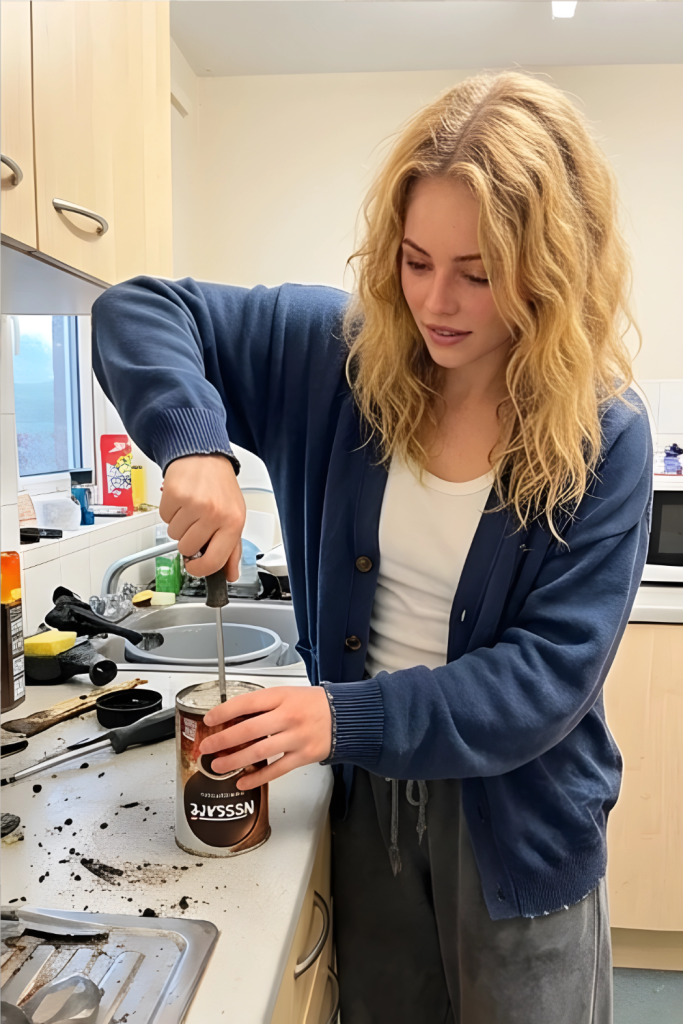
I spent a solid ten minutes hammering a flathead screwdriver through the bottom of the tin to punch five jagged holes. It was loud, the metal smelled faintly metallic and burnt, and I am fairly certain the downstairs neighbours thought I was dismantling a radiator. It was a completely bodged job, leaving sharp, lethal metal splinters on the inside, but it meant the water could actually escape.
The Great Compost Catastrophe
Next came the soil. I bought a cheap plastic sack of all-purpose compost from the corner shop. It had the texture of damp woodland and smelled incredibly earthy, which is quite jarring when you are standing in a cramped kitchen that usually just smells like burnt toast.
The moment I opened the bag, it split down the side. Wet, black clumps of soil instantly cascaded all over my cheap laminate worktops. I completely ignored the mess because I was focused on the rescue mission.
I pulled the basil from its plastic prison. The roots were tightly coiled around each other in a dense, yellowing knot. You have to be careful here. Always loosen the roots before you repot. If you just shove that square block of roots into a round tin, the plant will panic, fail to absorb water, and die anyway.
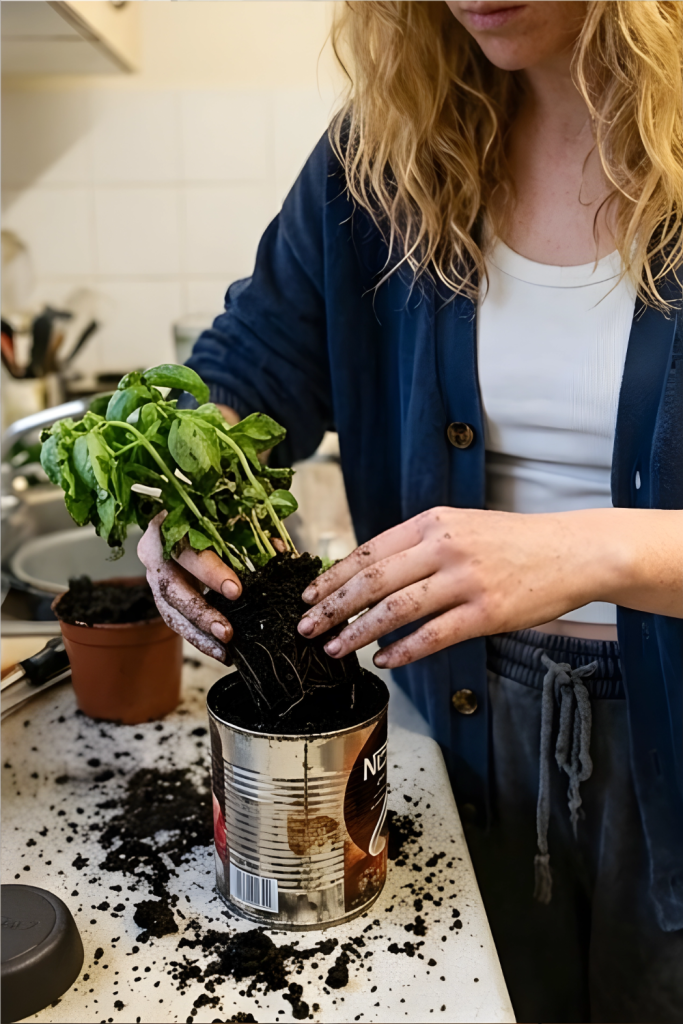
I gently massaged the bottom of the root ball, breaking the tightly bound fibers apart with my thumbs. The soil was cold and got violently wedged under my fingernails, but there is something genuinely therapeutic about getting your hands dirty indoors. I packed the fresh compost around the roots inside the coffee tin, patting it down firmly to eliminate any air pockets.
The Windowsill Waiting Game
I placed the newly housed basil onto a saucer I stole from my cupboards to catch the murky run-off water, and set it squarely in the middle of my living room windowsill.
For the next week, it became a slightly obsessive morning ritual. Every day before putting the kettle on, I would inspect the leaves. For the first two days, it looked like it was going to dramatically expire. The stems were limp. But by day four, the leaves started to firm up. They angled themselves toward the grey northern daylight pouring through the glass. The damp microclimate of the kitchen actually suited it perfectly.
The Triumphant Harvest
By the time National Allotment Week officially rolled around, my discount plant had not only survived, but it had also grown an entirely new tier of bright green leaves. It was an absolute victory.
The best part about growing herbs is eating them, but you have to harvest them correctly. Always pinch from the top node if you want a bushy plant, never just rip off the big bottom leaves. Snipping the top off forces the plant to split and grow two new branches, making it wider instead of tall and spindly.
I pinched off the top three leaves. The fragrant, peppery smell of fresh basil instantly hit the air. I tossed them into a bowl of the cheapest penne pasta and tinned tomatoes I own.
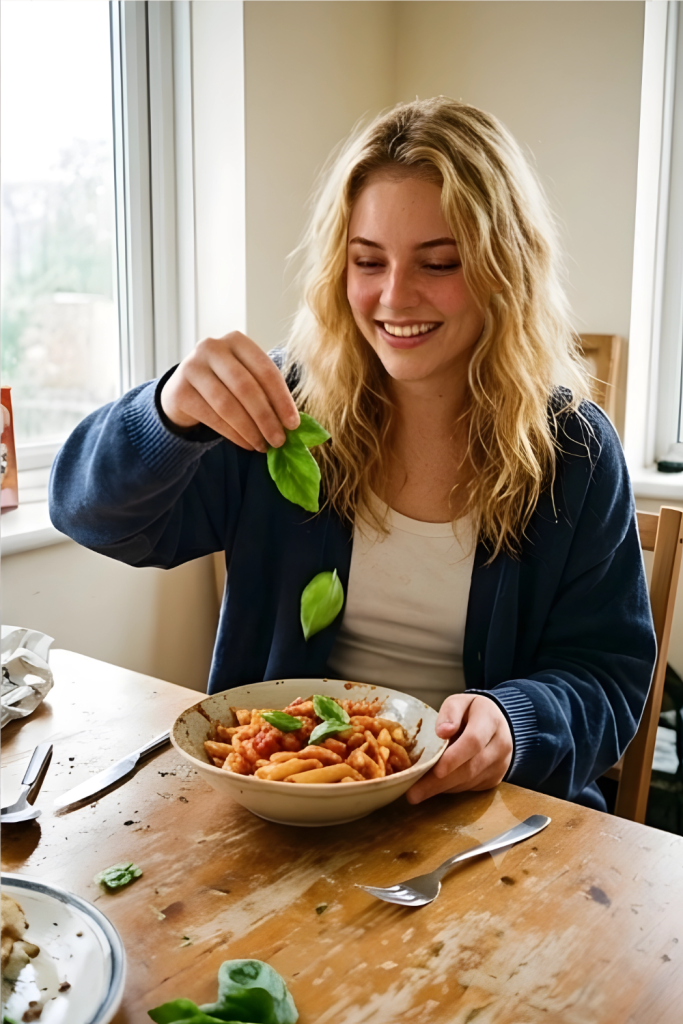
It did not magically turn my budget dinner into a Michelin-starred meal, but the tactile crunch and burst of fresh flavour made it taste like a massive achievement. I grew something. I kept it alive against all odds, and I did it without stepping a single foot outside.
You do not need a sprawling allotment to connect with nature. Sometimes, all you need is an empty instant coffee tin, a flathead screwdriver, and a healthy dose of stubbornness.
Right, I need to go scrub a horrifying amount of damp compost off my kitchen floor before it permanently stains the linoleum. What is the most chaotic DIY project you have ever attempted in a tiny space? Let me know, and tell me what you are having for tea tonight.