It is officially autumn in the Northwest of England. For anyone unfamiliar with this specific geographic delight, it means the sky has transitioned to a permanent shade of miserable slate and the rain has begun to fall entirely sideways. A heavy, windproof coat is not a luxury accessory here. It is a fundamental survival tool.
The problem is that buying a brand new, high-quality trench coat costs roughly the equivalent of my entire monthly wages. Sweeping up stale popcorn and scraping hardened nacho cheese off cinema seats does not exactly fund a designer wardrobe. I needed a miracle, or at the very least, a chaotic afternoon rummaging through second-hand rails.
This story begins on a very damp Tuesday in my local Oxfam, smelling faintly of old paperbacks and wet umbrellas, and ends with a garment that makes me feel like a film noir detective. But getting there was an absolute battlefield.
The Discovery of the Canvas Tent
Charity shops in my town are a psychological warzone. You have to be prepared to casually throw elbows with grandmothers who have spotted a pristine porcelain cat, while simultaneously scanning the rails for hidden gems. I was practically speed-walking past the menswear section when I saw it.
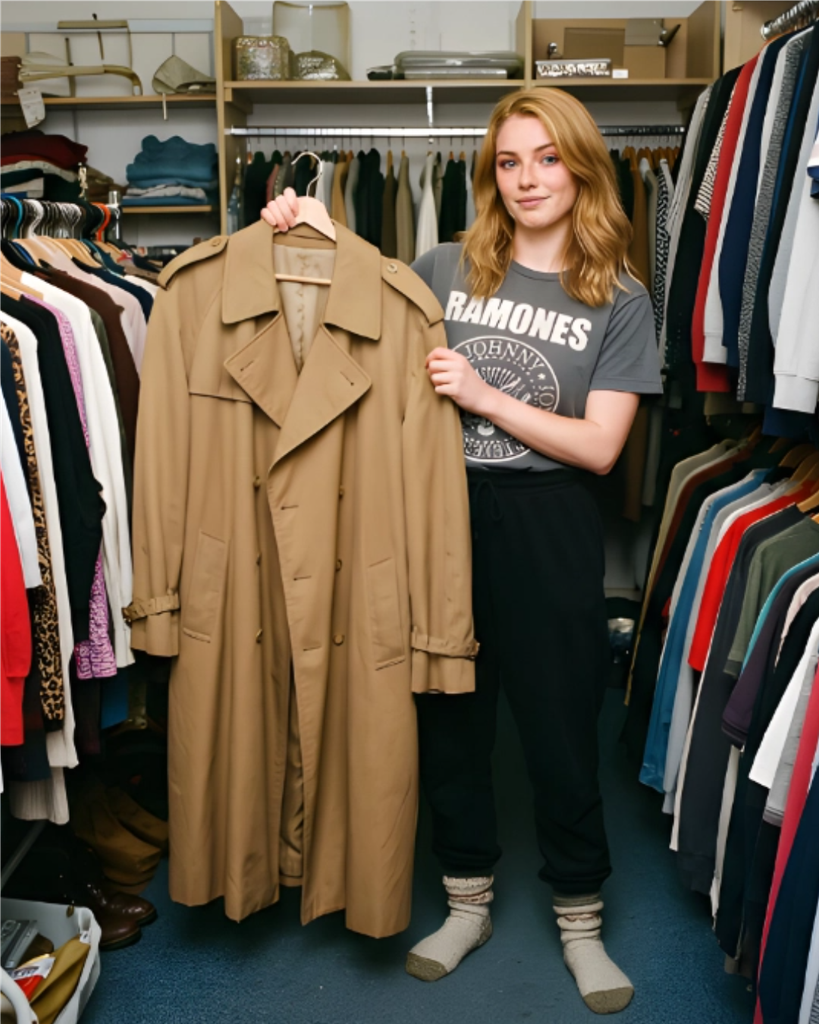
It was a vintage men’s trench coat. The colour was a perfect, slightly faded camel, and the fabric was a deeply satisfying, heavyweight gabardine. I pulled it off the rack, and the sheer weight of it nearly took my arm out of its socket. This was not the flimsy, paper-thin material you get from modern fast fashion. This was a coat built to survive a nuclear winter or a Tuesday night waiting for the bus in Manchester.
There was only one problem. It was absolutely gigantic.
I slipped it on over my jumper in the middle of the shop. The hem dragged on the linoleum floor. The shoulders extended past my actual shoulders by a good four inches. The sleeves completely swallowed my hands. I looked exactly like two toddlers stacked on top of each other trying to buy a 15-rated ticket to a slasher film at my cinema. It was a tragedy of proportions.
But I looked at the price tag. Seven pounds. That is less than I spend on my weekend survival order of salt and pepper chips and a spring roll. I refused to leave it behind. I dragged this magnificent, crumpled tent to the till, threw my money at the lovely volunteer, and lugged it home in a bin bag to avoid the rain.
The Architecture of a Bodge Job
Let us get one thing straight. I do not own a sewing machine. Even if I did, the relationship I have with thread is hostile at best. I needed to fundamentally alter the silhouette of a heavy-duty garment without doing any actual tailoring.
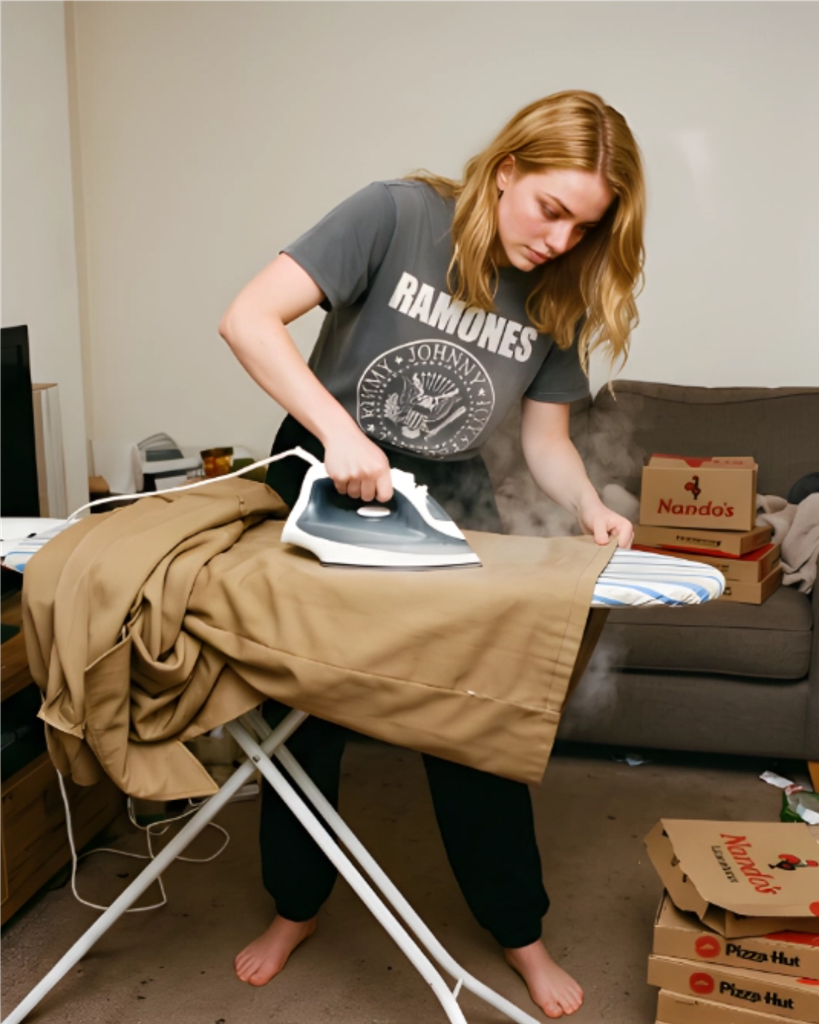
I laid the beast out on my living room floor, cleared away last night’s takeaway boxes, and assessed the damage. The goal was to keep the dramatic volume but control the length and the sleeves. My toolkit consisted of two items. First, an entire roll of extra-strong iron-on hem tape. Second, a colossal amount of heavy-duty silver safety pins.
The sleeves were the first victim. I folded the thick cuffs inward, pinning them temporarily while I measured them against my arms. I wanted them to hit right at the wrist bone to show a bit of sleeve from whatever jumper I wore underneath. The heavy gabardine fought back. It was stiff, stubborn, and refused to fold neatly.
I fired up the iron to its hottest setting, sandwiched the sticky webbing between the folded fabric, and pressed down like my life depended on it. Steam billowed up, nearly taking off my eyebrows. I burnt my left index finger almost immediately. I accidentally fused a tiny piece of the hem tape directly to my ironing board cover. If you are trying this at home, always use a damp tea towel between the iron and the coat to stop the fabric from going shiny. I learned this exactly three seconds too late, but thankfully the shine was on the inside of the cuff.
Sculpting the Silhouette
Next came the hem. Chopping the bottom off a coat with kitchen scissors is a terrifying psychological threshold to cross. Once you cut, there is no going back. I put the coat on, stood on a chair in front of the mirror, and used a white eyeliner pencil to mark where I wanted it to fall.
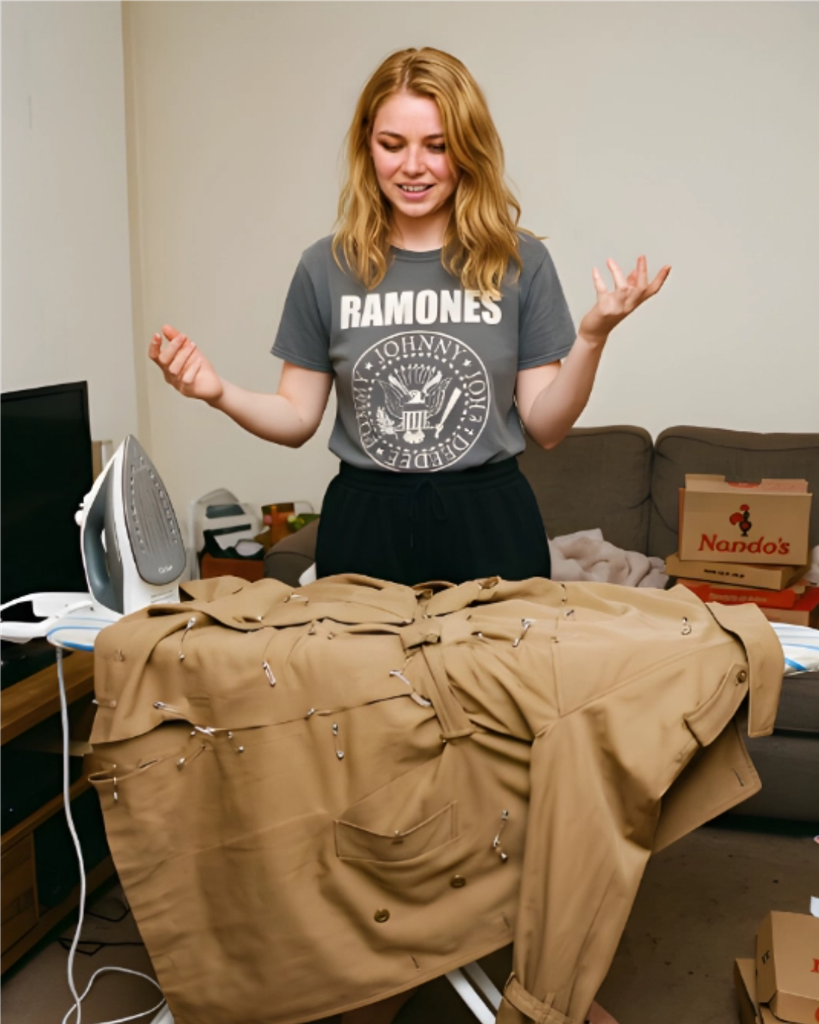
I hacked away the excess fabric, leaving a jagged, questionable line. Then came the hem tape again. Folding that thick fabric up and ironing it flat took the better part of an hour. The safety pins came into play at the back vent. The coat was so wide that it flared out strangely at the back, so I creatively folded the excess fabric inward along the seam and secured it with six massive safety pins hidden completely on the inside. It is a structural nightmare underneath, but from the outside, it looks perfectly tailored.
The final and most crucial step was the waist. The belt that came with the coat was far too long, so I completely binned it. Instead, I dug out a massive, chunky black leather belt with a dull brass buckle that I bought years ago.
The Tactile Victory
I put on my heavy black boots, pulled the trench coat on, and cinched the chunky black belt tightly around my waist.
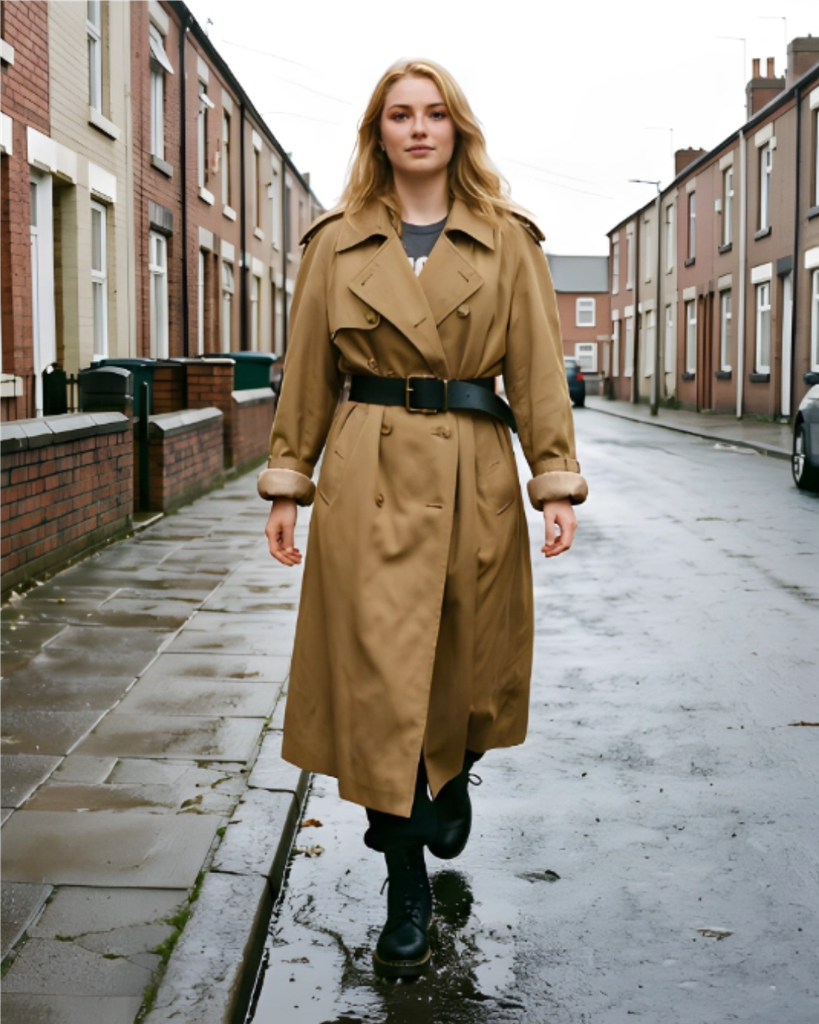
The transformation was unbelievable. Because I had shortened the sleeves and the hem, the massive volume of the coat was no longer drowning me. Instead, the cinched waist forced the thick fabric to gather and fall in a dramatic, heavy drape. The oversized shoulders suddenly looked intentional and slouchy rather than ill-fitting.
But the best part is entirely how it feels. There is a heavy, satisfying swish of the thick gabardine fabric hitting against my calves as I walk. The weight of it makes you stand up straighter. The cinched waist creates this brilliant, dramatic drape that leaves the actual shape of my figure entirely to the imagination, while still looking incredibly put-together. It does not cling, it does not restrict, it just flows with a purposeful, cinematic energy.
I took it for a test drive to the local shops in the pouring rain. Stomping through autumn puddles in a bespoke-feeling garment that I wrestled into submission on my living room floor is a uniquely empowering feeling. The rain beaded right off the vintage fabric. I felt completely invincible, entirely comfortable, and deeply smug about the fact that my fabulous film noir aesthetic cost me seven quid and a burnt finger.
The Golden Rule of Thrifting
If there is one thing my psychology degree taught me about human behaviour, it is that we are easily intimidated by things that do not immediately fit into our expected parameters. We see a coat that is three sizes too big and we walk away. But the reality is that fabric is just a suggestion until you enforce your own will upon it.
You do not need to be a master tailor to completely change how a piece of clothing makes you feel. You just need some sticky tape, a hot iron, and the stubborn refusal to pay high street prices. Embrace the bodge job. If the inside of your coat is held together by safety pins and hope, nobody has to know but you.
Right, I am off to see if my local Chinese takeaway is open yet, because wrestling gabardine has genuinely destroyed my energy levels and I need a spring roll immediately. What is the worst DIY fashion disaster you have successfully hidden from the public? Tell me I am not the only one walking around held together by pins.