
Right now, if you open any social media app, you are instantly assaulted by the same highly curated aesthetic. Everyone seems to be wafting through a European coastal town, clutching an Aperol Spritz, and wearing a £150 matching linen set that looks like it was woven by angels.
Meanwhile, I’m in the Northwest of England. It’s a humid July Tuesday, the air is thick enough to chew, and I have just finished a shift at the cinema where the air conditioning gave up the ghost three hours ago. The general public were acting completely feral, leaving half-eaten hotdogs in the cupholders, and I spent my entire break staring at my phone, intensely jealous of women in Amalfi who look like they have never sweat a drop in their lives.
The psychology behind the “coastal grandmother” trend is fascinating if you really look at it. We aren’t just buying clothes; we are trying to purchase the fantasy of a slower, breezier, unbothered life. We drop ridiculous money on raw textiles because we want to feel like the kind of person who has the time to stroll through a Mediterranean fruit market.
I don’t have a Mediterranean fruit market. I have a British Heart Foundation and a tenner.
So, I decided to bypass the aspirational marketing trap entirely. I wanted that effortless, breathable, lightweight feeling, but I absolutely refused to pay a premium for it.
The £4 Blueprint
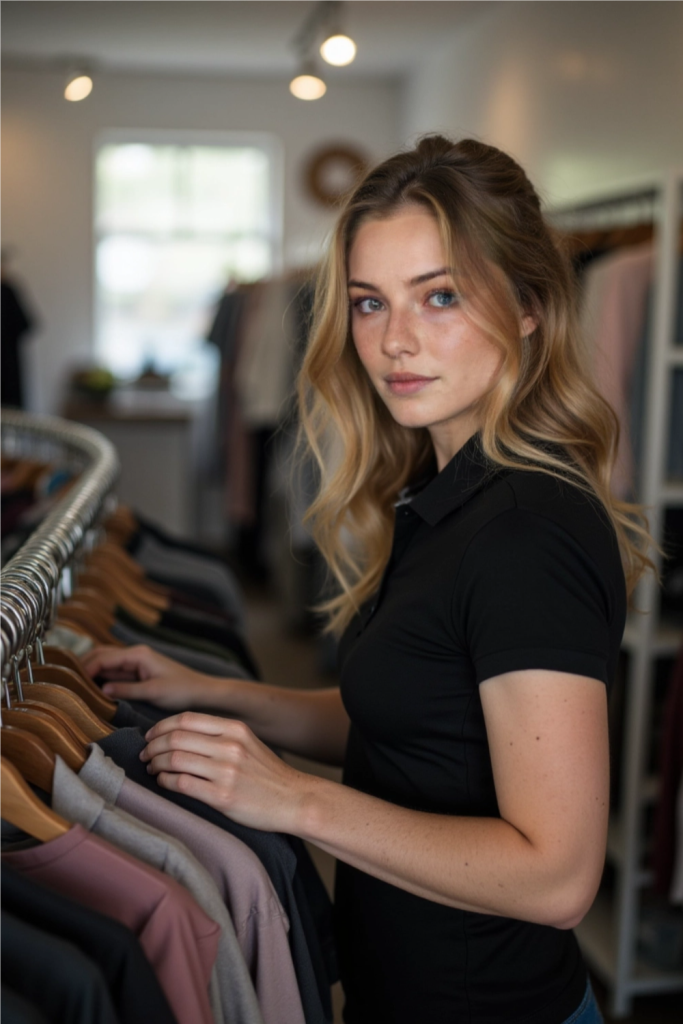
I walked into the charity shop on my way home, practically vibrating with the kind of delusional confidence that usually precedes a major crafting disaster. I marched straight past the women’s section—which was mostly full of fast-fashion polyester that makes you sweat just by looking at it—and headed for the men’s racks.
If you want the ultimate drape and maximum fabric yardage for your money, you always go to the men’s XXL section.
Tucked between a horrendous golf polo and a fleecy zip-up was the holy grail: a massive, tent-like men’s grandad shirt in a muted sage green. It was 100% genuine linen, perfectly worn-in, and priced at exactly £4. It smelled faintly of mothballs and old paperbacks, but the texture was undeniable.
When you find good linen, you can feel the quality immediately. It has a dry, slightly stiff resistance to it that softens the second it hits warm water. I bought it immediately, dashed back to my flat, threw it in a quick wash to banish the charity shop aroma, and laid it out on my living room floor.
Blind Confidence and Blunt Scissors
My expertise is purely trial-and-error, and my experience is usually chaotic.
Do not try to measure a fluid fabric like linen with a rigid tape measure if you are impatient. It will just slide around and annoy you.
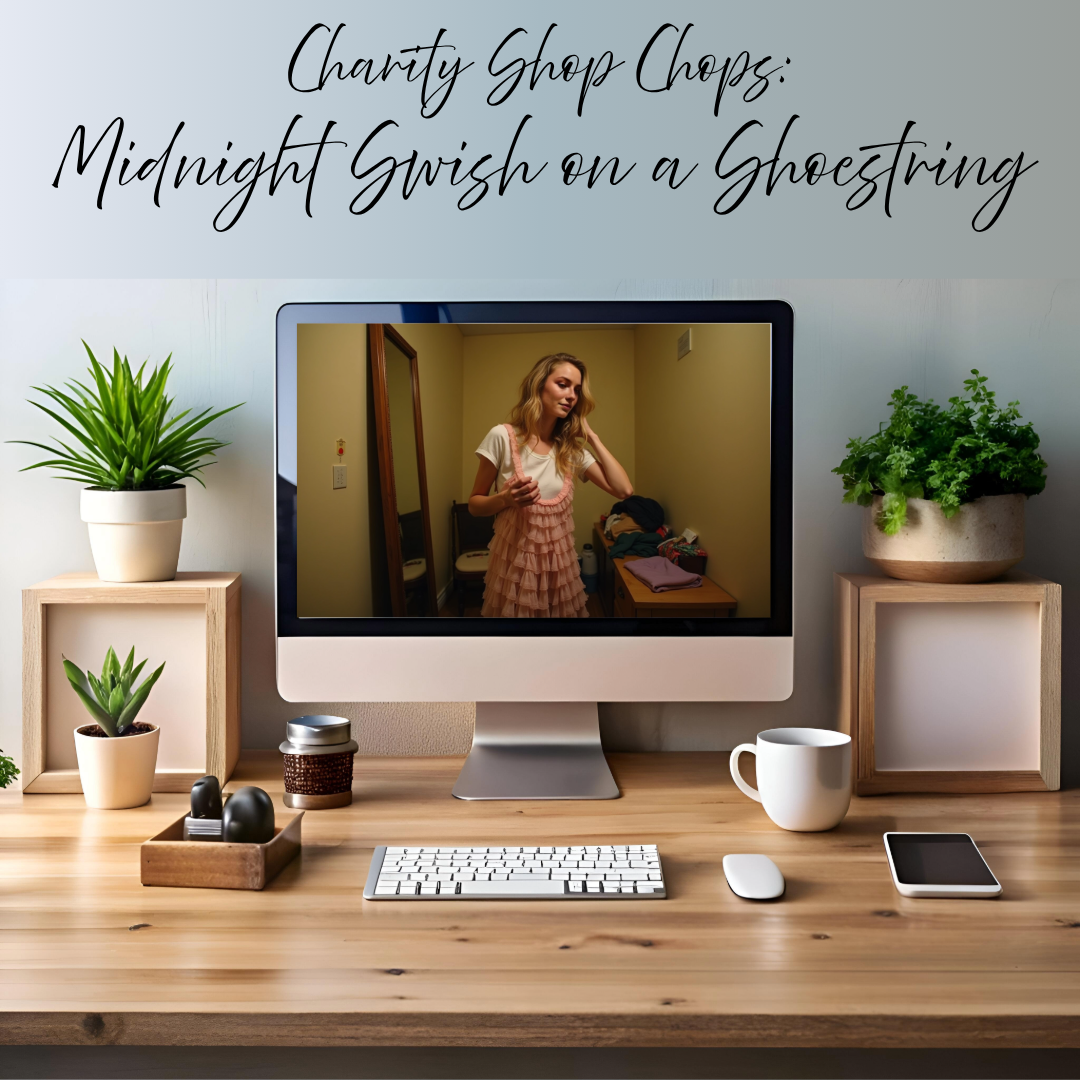
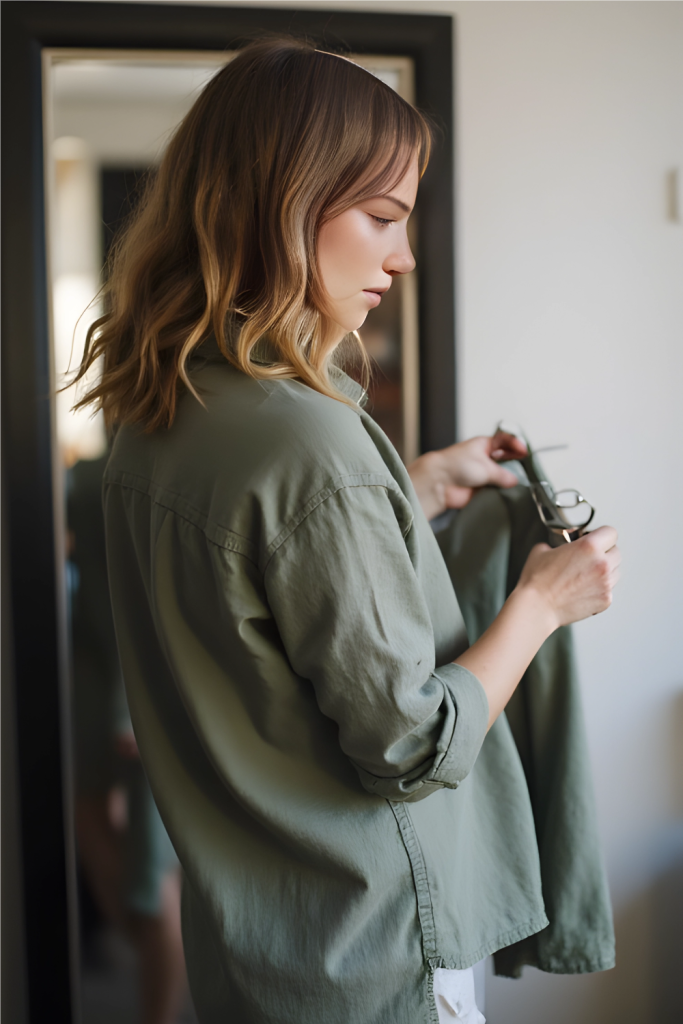
Instead, I put the massive shirt on, stood in front of my bedroom mirror, and used a piece of chalk to draw a rough line right across the middle of my torso, just below my ribs. I wanted a high-waisted skirt and a cropped top, and I figured cutting the thing completely in half was the most straightforward way to achieve both.
I couldn’t find my actual fabric shears, so I armed myself with a pair of blunt kitchen scissors that have seen far too many frozen pizza boxes.
The chop was a massacre. Because the scissors were dull, they chewed through the linen rather than slicing it, leaving a completely frayed, jagged edge along the cut. At first, I panicked. But then I realised that “raw, rustic edges” are exactly what those expensive influencer brands charge extra for. I decided to lean into it. If you can’t fix a mistake, rebrand it as an intentional design choice.
The Anatomy of a Bodge-Job
Turning the two halves into a wearable outfit required a bit of spatial gymnastics.
The Top: I took the top half of the shirt (the part with the collar and sleeves) and left it completely unbuttoned. Instead of wearing it normally, I pulled the two front panels across my torso, overlapping them to create a makeshift wrap top. I took the raw, frayed corners at the bottom and tied them securely at the back of my waist. Because the shirt was an XXL, the sleeves fell beautifully past my shoulders, creating a slouchy, oversized drape that felt incredibly intentional.
The Skirt: The bottom half of the shirt was essentially a large fabric tube. I folded the raw top edge over by about an inch to create a channel, snipped a hole, and aggressively fed a piece of elastic through it using a safety pin.
I will be brutally honest with you: I misjudged the elastic length. It is slightly too tight, and one side of the channel completely unravelled while I was threading it. Right now, there is a large safety pin holding the left hip of this skirt together. You can’t see it because the top drapes over it, but I know it’s there, holding onto my dignity for dear life.
The SWISH (Or: Why We Tolerate Raw Hems)
Despite the wonky hemline if you look too closely, and the hidden safety pin, the tactile victory of this outfit is unbelievable.
Stepping out into the humid Kendal afternoon felt entirely different. The fabric has this breezy, lightweight swish against the skin as you walk. It doesn’t cling anywhere. The intentionally oversized, raw-hemmed drape leaves just enough to the imagination, catching the air and creating a natural ventilation system that my polyester work uniform could only dream of.
It feels completely effortless. I am walking around feeling deeply comfortable in my own skin, moving freely, and radiating the exact same unbothered, coastal energy as the £150 sets—except mine cost me £4 and a mild fight with some kitchen scissors.
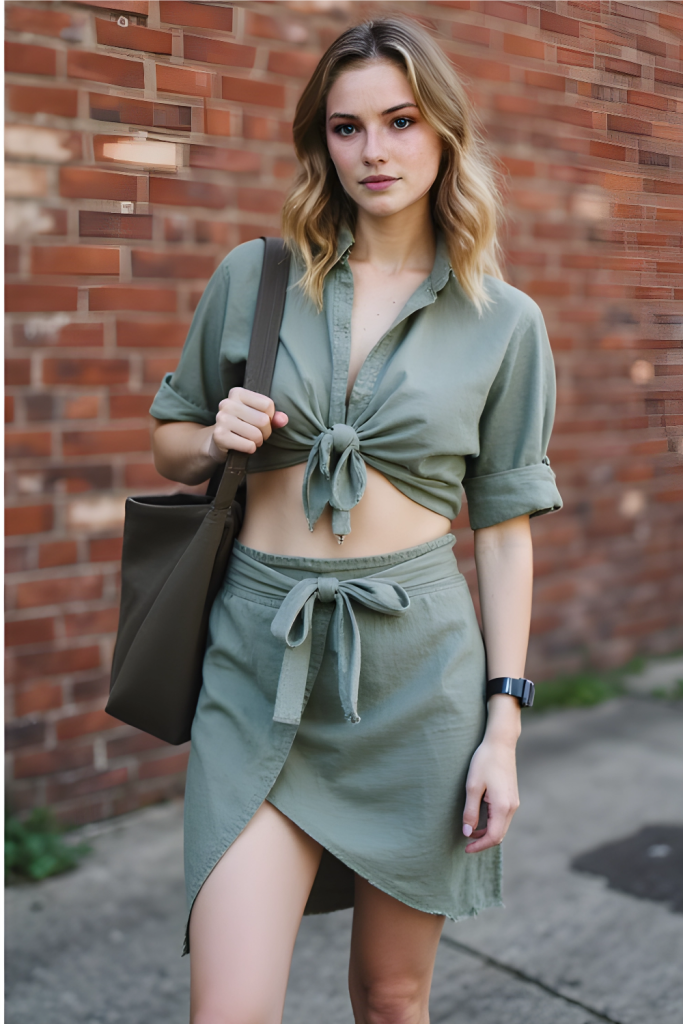
There is a massive psychological boost in wearing something you’ve bodged together yourself, especially when it actually works. You aren’t just wearing clothes; you’re wearing a tiny, private victory against the fast-fashion machine.
I highly recommend giving it a go. Just, please, for your own sanity, find your proper fabric scissors first.
Right, I’m off to test the structural integrity of this safety pin by eating a massive plate of chips down the pub. What’s the most chaotic DIY clothing hack you’ve ever actually worn out of the house? Let me know in the comments before my skirt falls apart.